The glass is only the beginning
A touchscreen feels so familiar that it becomes invisible. But there is a wonderful question hiding underneath every tap: how does a flat sheet of glass know where you are touching it?
A grid, a change, a position
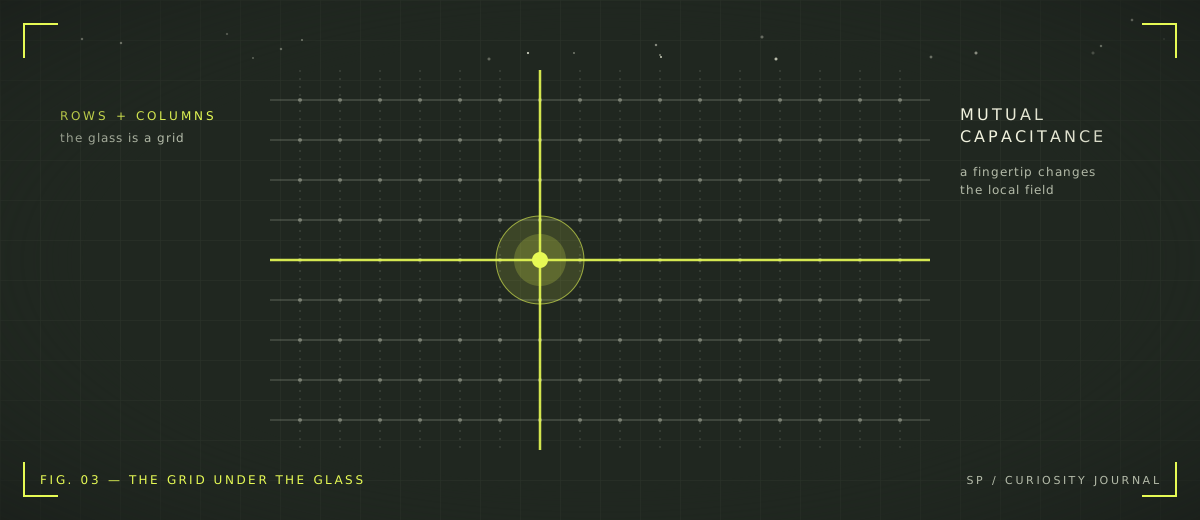
In projected capacitive touch systems, electrodes under the surface form a sensing grid. A nearby finger changes the electrical conditions—specifically, capacitance. The controller measures changes across the grid and works out a position. Processing then turns a sequence of positions into familiar actions such as swipes. The display creates the picture; the touch-sensing system detects the interaction. Source: Microchip’s capacitive touch overview.
The subtle part
The engineering is not just detecting something. It is separating a useful signal from a changing environment. Microchip’s design guidance explains that the finger interacts with electric fields between sensing electrodes; the behavior depends on how the sensor is designed. That is why “it measures pressure” is not a good general explanation for capacitive touch. Source: Microchip’s sensor design guide.
My product lens
I like asking where the physical world becomes a software decision. With a touchscreen, that boundary is right under your finger. It is a reminder that an interface is not only colors and buttons: it starts with the sensing system that makes an intention legible.
A tap is a physical event, an electrical measurement, and a software decision—all in one small movement.
Something here sparked another question?
Let’s talk about it